What Your Air Conditioner Isn't Telling You: The Slow Leak That Causes Summer Breakdowns
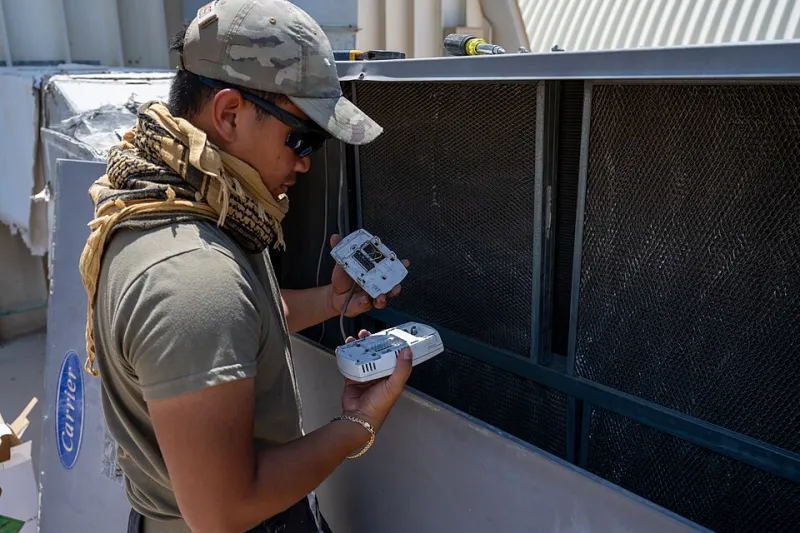
Photo: U.S. Air Force AFCENT by Airman 1st Class Derrick Bole, Public domain, via Wikimedia Commons
Summer in most parts of the United States doesn't give you much warning before it arrives in full force. One week you're comfortable, and the next you're depending entirely on your air conditioner to make your home livable. That's precisely why a refrigerant leak is such a damaging problem—it works against you quietly, long before the hottest days arrive, and it rarely reveals itself until your system is already struggling to keep up.
For homeowners who take reasonable care of their HVAC equipment, a refrigerant leak can feel like a betrayal. There's no obvious damage, no strange event that preceded it, and often no single moment when the problem became apparent. That's the nature of this particular issue, and understanding it is the first step toward protecting your system.
How Refrigerant Actually Works—And Why Losing It Is So Damaging
Refrigerant is the substance that makes cooling possible. It circulates through your air conditioning system in a continuous loop, absorbing heat from inside your home and releasing it outside. Contrary to a common misconception, refrigerant is not consumed like fuel—under normal operating conditions, the amount in your system should remain constant for the life of the equipment.
When a leak develops, that balance is disrupted. As refrigerant levels drop, the system must work harder to achieve the same cooling effect. The compressor—the most expensive component in your air conditioner—comes under increased strain. Temperatures inside the system begin to behave erratically. Efficiency falls. And because the loss is gradual, your system adapts in small increments, masking the problem until it reaches a tipping point.
This is why refrigerant leaks are particularly insidious: your air conditioner doesn't stop working immediately. It simply works less effectively, for longer periods, at greater cost—until eventually it can't keep up at all.
Where Leaks Tend to Develop
Refrigerant travels through a closed network of copper tubing and fittings. Over time, several factors can compromise that network. Vibration from normal system operation gradually weakens connection points. Corrosion—particularly a form called formicary corrosion, caused by a reaction between copper, moisture, and certain organic compounds—can eat microscopic holes through copper lines. Physical damage from lawn equipment, pest activity, or improper service work can also introduce breach points.
In older systems, the rubber seals and valves that contain refrigerant can deteriorate with age, allowing small but steady losses. Even systems that were improperly installed may have fittings that were never fully secure to begin with.
None of these failure points are visible during a casual inspection. The leaks themselves are often too small to see and too slow to produce any immediate, obvious symptom.
The Warning Signs Homeowners Most Often Miss
Because refrigerant loss is gradual, the early indicators are easy to rationalize away. A home that takes slightly longer to cool down on a hot afternoon might be attributed to the weather. A modest increase in the electric bill might be blamed on higher usage. These explanations aren't unreasonable—but they can allow a developing problem to go unaddressed for an entire season.
There are specific signs worth paying closer attention to:
Reduced cooling capacity over time. If your system used to reach your set temperature reliably but now seems to fall short on warm days, that's a meaningful change worth investigating.
Ice forming on the indoor unit or refrigerant lines. This is one of the more visible signs of low refrigerant. When levels drop, the evaporator coil can become too cold and cause moisture in the air to freeze around it. Paradoxically, ice on your air conditioner means it is not cooling your home effectively.
A hissing or bubbling sound near the unit. While not always present, these sounds can indicate refrigerant escaping through a breach in the lines.
Higher-than-expected energy bills without a change in usage. A system running longer cycles to compensate for reduced efficiency will draw more power.
Warm air from supply vents despite the system running continuously. At a certain point of refrigerant depletion, the system simply cannot transfer enough heat to make a noticeable difference in indoor temperature.
If any of these patterns sound familiar, they warrant a professional evaluation—not a wait-and-see approach.
Why DIY Detection Falls Short
It's understandable that some homeowners attempt to diagnose refrigerant issues on their own. Online resources offer guidance on everything from checking refrigerant pressure to using soapy water to find leak points. However, these approaches have significant limitations.
First, handling refrigerant is regulated under federal law. The EPA requires that anyone purchasing or working with refrigerants used in HVAC systems hold an appropriate certification. This isn't a technicality—it reflects genuine safety and environmental considerations. Refrigerants can cause injury if handled improperly, and their release into the atmosphere carries real environmental consequences.
Second, accurately measuring refrigerant pressure requires calibrated gauges and an understanding of how to interpret readings in the context of ambient temperature, system design, and other variables. A pressure reading taken without that context can be misleading.
Third, and perhaps most importantly, finding the source of a leak requires more than checking the obvious spots. Many leaks occur in locations that are difficult to access and require specialized leak detection equipment—including electronic detectors and UV dye systems—to locate reliably.
Attempting to add refrigerant without addressing the underlying leak is also counterproductive. The refrigerant will continue to escape, the root cause remains unresolved, and you may be masking symptoms that would otherwise prompt a more thorough repair.
What Professional Diagnostics Actually Involve
When a qualified HVAC technician evaluates a potential refrigerant issue, the process goes well beyond checking a gauge. A thorough diagnostic includes measuring system pressures and comparing them against manufacturer specifications, inspecting the full length of accessible refrigerant lines for signs of corrosion or damage, using electronic leak detectors or UV dye to locate breach points, and assessing the condition of the compressor and coils for signs of stress caused by prolonged low-refrigerant operation.
Once a leak is found, the appropriate repair—whether that's replacing a section of copper line, resealing a fitting, or addressing a corroded coil—can be completed before refrigerant is recharged to the correct level. This sequence matters. Recharging without repairing ensures the problem will return.
The Cost of Waiting
A refrigerant leak that is caught early is a manageable repair. One that is allowed to persist through a full cooling season can result in compressor failure—a repair that often costs more than the system itself is worth. In many cases, extended operation under low-refrigerant conditions accelerates wear on multiple components simultaneously, turning a single repair into a broader mechanical overhaul.
The timing of discovery also matters practically. Scheduling a diagnostic inspection in spring—before peak cooling season—means technicians are more available, lead times for parts are shorter, and you're not making decisions under the pressure of an uncomfortably hot home.
If your system has been showing any of the signs described here, or if it has been more than a year since a professional inspection, the most prudent step is to schedule a service call before summer arrives in earnest. Refrigerant leaks don't resolve on their own, and the longer they go unaddressed, the more they cost to correct.