Your HVAC System Has an Expiration Date—Here's How to Know When You've Reached It
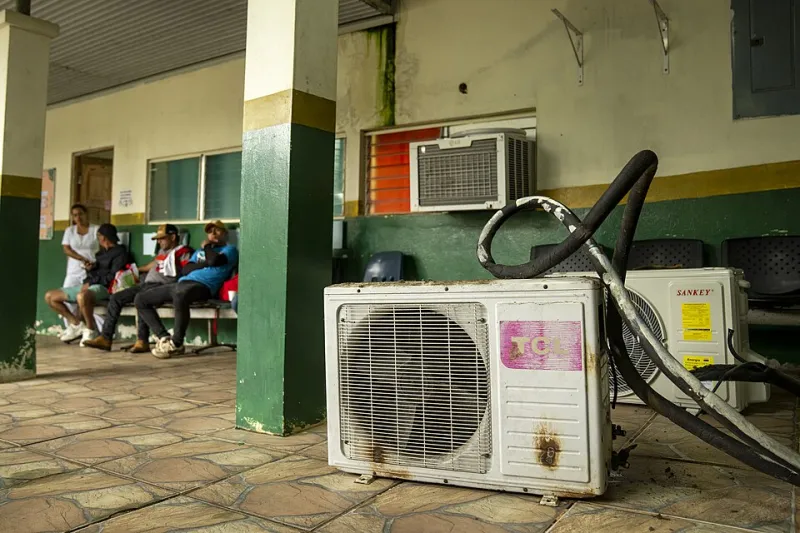
Photo: U.S. Air Force photo by Andrea Jenkins, Public domain, via Wikimedia Commons
Most homeowners don't think about their HVAC system until something goes wrong. A strange noise at 2 a.m., a utility bill that seems inexplicably high, or a room that stubbornly refuses to cool down—these are the moments that force the conversation. But by that point, the system may have been quietly declining for years, consuming more energy and demanding more repairs than anyone realized.
Understanding where your equipment stands in its service life is not just useful—it's essential to protecting your home, your budget, and your long-term comfort.
How Long Should an HVAC System Actually Last?
The general industry benchmark for a central air conditioning system is between 15 and 20 years, while furnaces and heat pumps typically fall in the 15 to 20-year range as well, depending on usage, climate, and maintenance history. However, these figures represent optimal conditions. A system that has been inconsistently maintained, installed in a poorly insulated home, or subjected to extreme seasonal demands may begin showing serious wear well before the 15-year mark.
Manufacturers design their equipment with expected operational lifespans in mind, and most publish this information in product documentation. If you're unsure how old your system is, the serial number on the outdoor condenser or indoor air handler can typically be decoded to reveal the manufacture date. Your local HVAC technician can assist with this if the format isn't immediately clear.
Knowing that date is the foundation of every repair-versus-replace conversation worth having.
The Hidden Cost of "Just One More Repair"
There's a natural human tendency to repair rather than replace. It feels financially conservative, and in many cases, it is. A capacitor replacement or a refrigerant recharge on a system that's only five years old makes perfect sense. The math is straightforward: a modest repair cost versus the significant investment of full system replacement.
But that logic begins to break down as a system ages. The components inside an HVAC unit—compressors, heat exchangers, evaporator coils, blower motors—are all subject to wear. When one part fails in an older system, it rarely fails in isolation. It often signals broader mechanical fatigue. Replacing a compressor on a 17-year-old unit, for example, can run anywhere from $1,200 to $2,500 or more, depending on the system. If that same unit then requires another significant repair within 12 to 18 months, the cumulative expense begins to rival—or exceed—the cost of a new, energy-efficient installation.
A useful rule of thumb used widely in the HVAC industry is the "5,000 rule": multiply the age of the system by the estimated repair cost. If that number exceeds $5,000, replacement is typically the wiser financial path.
Efficiency Doesn't Just Decline—It Erodes Steadily Over Time
Beyond repair costs, there's another financial reality that often goes unexamined: the gradual erosion of efficiency. A well-maintained air conditioning system may operate at 95 percent of its rated efficiency in its early years. By the time it reaches the 12 to 15-year mark, that figure may have dropped to 75 or 80 percent—even without any obvious mechanical failure.
This matters because HVAC systems account for a significant portion of a home's total energy consumption. According to the U.S. Department of Energy, heating and cooling together represent nearly half of the average American household's energy use. A system operating at diminished efficiency doesn't just cost more to run—it works harder to achieve the same results, which accelerates wear on remaining components and shortens the remaining useful life of the equipment.
Modern systems are rated using SEER2 (Seasonal Energy Efficiency Ratio) standards, and today's high-efficiency units can achieve ratings that are dramatically superior to equipment manufactured even a decade ago. Homeowners who replace an older, low-SEER system with a current high-efficiency model frequently report meaningful reductions in monthly energy costs—often enough to offset a portion of the replacement investment over time.
Signs That Your System Is Aging Beyond Its Usefulness
Age alone doesn't always determine when a system should be replaced. Context matters. But there are several indicators that, taken together, suggest a system may be approaching the end of its productive life:
- Frequent or escalating repair needs. If your system has required professional service two or more times in a single year, that pattern is unlikely to improve on its own.
- Inconsistent performance. Difficulty maintaining set temperatures, uneven cooling across rooms, or a system that runs continuously without reaching the thermostat's target are all signs of declining capacity.
- Unusual sounds or odors. Grinding, rattling, or persistent musty smells can indicate worn mechanical components or internal issues that go beyond routine maintenance.
- Rising energy bills without explanation. When consumption increases but usage habits haven't changed, diminished system efficiency is often the cause.
- The system uses R-22 refrigerant. R-22 (Freon) was phased out of production in the United States as of January 2020. Systems that rely on it are not only difficult and expensive to service—they represent a technology that is no longer supported by the broader supply chain.
Making the Decision with Confidence
The repair-versus-replace decision is rarely made in a vacuum. It involves the age of the equipment, the nature and cost of the required repair, the system's recent service history, and the broader context of the home's energy performance. It also involves timing: replacing a system proactively—before a complete breakdown—gives homeowners the opportunity to plan, compare options, and schedule installation at a time that's convenient rather than urgent.
Emergency replacements, by contrast, often mean compressed timelines, limited choices, and the pressure of making a significant financial decision while temperatures inside the home are already uncomfortable.
At Mast Air Conditioning, we believe that informed homeowners make better decisions. When a system reaches the stage where repairs are becoming routine rather than exceptional, a professional assessment of its remaining useful life is a worthwhile investment in itself. Understanding exactly where your equipment stands—mechanically, financially, and in terms of efficiency—gives you the clarity to act with confidence rather than react under pressure.
The Bottom Line
Your HVAC system is not designed to last forever, and treating it as though it will can become an expensive assumption. Knowing the true age of your equipment, understanding the compounding costs of repeated repairs, and recognizing the efficiency losses that accumulate over time are the cornerstones of a sound long-term maintenance strategy.
When the numbers no longer favor repair, replacement isn't a defeat—it's a decision that protects your home's comfort, your household budget, and your peace of mind for the years ahead.