What's Hiding Above Your Ceiling: How Inadequate HVAC Ventilation Quietly Destroys Homes
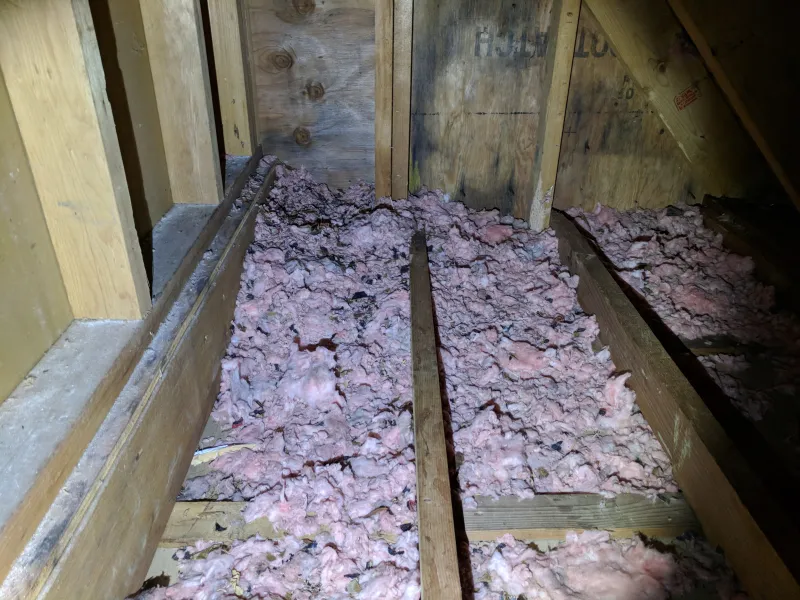
Photo: attic insulation moisture damage HVAC ventilation inspection, via s3.amazonaws.com
The Problem You Can't See Until It's Too Late
Most homeowners think about their HVAC system in terms of comfort—whether the house feels cool in July or warm in January. What rarely comes to mind is what that system is doing, or failing to do, in the spaces nobody visits: the attic above the master bedroom, the crawl space beneath the kitchen floor, the narrow void between walls. These are the areas where poor ventilation quietly stages its damage, often for months or years before anyone notices.
The consequences are not minor. When an HVAC system fails to move air properly through a home, moisture has nowhere to go. It accumulates. It condenses on wood framing, insulation, and sheathing. Over time, that persistent dampness creates ideal conditions for mold growth, wood rot, and in severe cases, structural compromise that no amount of air conditioning can reverse.
Understanding how this happens—and what to watch for—is one of the most valuable things a homeowner can do to protect both their property and their family's health.
Why Attics and Crawl Spaces Are Especially Vulnerable
Not all areas of a home are equally exposed to ventilation-related damage. Attics and crawl spaces carry a disproportionate share of the risk, and the reasons are straightforward.
Attics accumulate heat. During summer months in most parts of the United States, an unventilated or poorly ventilated attic can reach temperatures well above 130°F. When warm, humid air from the living spaces below rises and meets that superheated environment, it releases moisture onto every surface it contacts. Insulation becomes saturated. Roof decking begins to degrade. Rafters soften.
Crawl spaces face the opposite but equally damaging dynamic. Ground moisture naturally migrates upward, and without adequate airflow to carry that humidity away, it settles into floor joists and subfloor material. Homeowners with crawl spaces who notice soft spots in their flooring, musty odors near baseboards, or unexplained increases in allergy symptoms may already be experiencing the effects of this kind of moisture intrusion.
In both cases, the HVAC system plays a direct role. A system that is undersized, improperly ducted, or running with restricted airflow cannot adequately condition these transitional spaces—and the building envelope suffers as a result.
Warning Signs That Ventilation Has Become a Problem
Because the damage often begins in areas homeowners rarely inspect, recognizing early warning signs requires paying attention to subtler indicators throughout the home.
Persistent musty or stale odors are among the earliest and most reliable signals. If a particular room, hallway, or area near a vent consistently smells damp or earthy despite regular cleaning, moisture is likely present somewhere within the structure or ductwork.
Visible condensation on windows or walls, particularly during temperature transitions between seasons, suggests that humidity levels inside the home are not being adequately managed. This is often a sign that the HVAC system is not exchanging air efficiently.
Unexplained increases in energy bills can also point to ventilation issues. When an attic is poorly ventilated, the heat it retains transfers directly into the living spaces below, forcing the air conditioning system to work significantly harder than it should. The result is higher operating costs with no improvement in comfort.
Discoloration or staining on ceilings and upper walls should never be dismissed as a cosmetic issue. While some staining originates from roof leaks, others are caused by moisture condensing on cool surfaces from the inside—a direct consequence of inadequate airflow and humidity control.
Allergy symptoms or respiratory irritation that worsen at home and improve when residents leave the property are among the most serious indicators. Mold spores released by colonies growing in hidden spaces circulate through the same ductwork that delivers conditioned air to every room.
The HVAC System's Role in Whole-Home Moisture Management
A well-functioning HVAC system does more than heat and cool. It actively manages humidity, filters airborne particulates, and maintains consistent pressure throughout the home that prevents the infiltration of outside air through gaps in the building envelope. When any part of that system is compromised—whether through aging equipment, blocked ducts, or an installation that was never properly sized—moisture management breaks down.
One of the most common contributors to poor attic ventilation is ductwork that passes through unconditioned spaces without proper insulation or sealing. Ducts that leak conditioned air into an attic are not only wasting energy; they are also introducing temperature differentials that accelerate condensation. Similarly, bathroom exhaust fans that terminate inside the attic rather than venting to the exterior are a frequent and underappreciated source of moisture accumulation.
HVAC systems that are oversized for the home present a different but equally damaging problem. A system that cycles on and off too quickly—a condition known as short cycling—never runs long enough to adequately dehumidify the air it conditions. The space may reach the target temperature, but relative humidity remains elevated, and moisture continues to find its way into structural materials.
What a Professional Assessment Reveals
Many of the conditions described above are invisible to the untrained eye and require professional evaluation to identify and address. A qualified HVAC technician conducting a thorough assessment will examine not just the equipment itself, but the broader system—including how air is being distributed, whether ductwork is sealed and properly insulated, and whether the system's capacity is appropriate for the home's actual load.
Attic and crawl space inspections performed in conjunction with an HVAC evaluation can reveal moisture readings, signs of mold growth, and evidence of condensation that would otherwise go undetected until structural repairs become unavoidable. Thermal imaging tools can identify cold spots in insulation and duct leakage points that no visual inspection alone would catch.
Addressing ventilation problems at this stage—before mold remediation or structural repair is required—is almost always significantly less expensive than waiting for symptoms to become impossible to ignore.
Protecting Your Home Starts With the Air Inside It
The HVAC system is the lungs of a home. When it breathes properly, every part of the structure benefits. When airflow is restricted, unbalanced, or misdirected, the damage accumulates in the places least likely to be noticed until the cost of correction has grown considerably.
For homeowners who have not had a comprehensive HVAC and ventilation assessment within the past year—or who have noticed any of the warning signs described above—scheduling a professional evaluation is the most practical step available. The inspection itself is straightforward. The peace of mind it provides, and the damage it may prevent, is anything but trivial.
At Mast Air Conditioning, our technicians are experienced in evaluating whole-home ventilation performance alongside traditional HVAC maintenance and repair. If you have questions about your system's airflow or suspect that moisture may be affecting your home, we encourage you to reach out. Comfort you can count on begins with a home that's properly protected—from the foundation to the roofline.