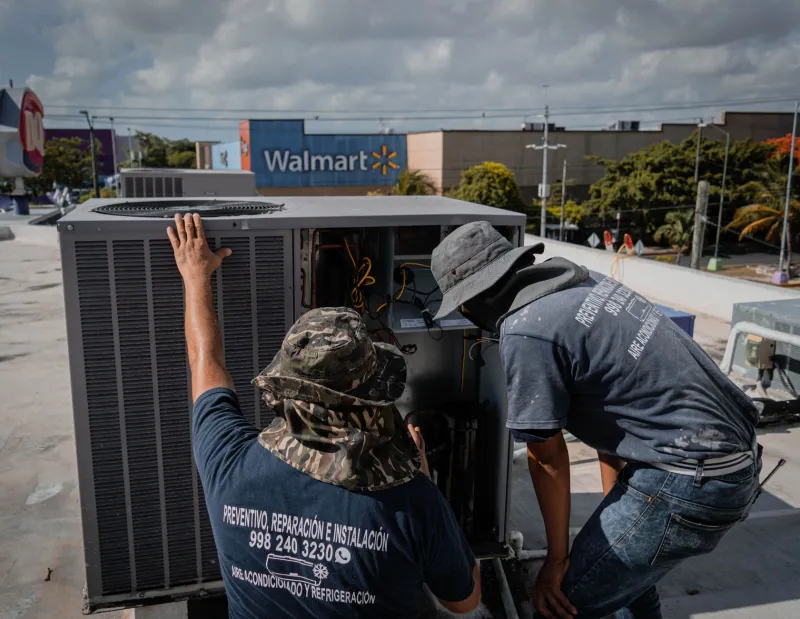
Before the Heat Hits: What Spring AC Maintenance Can Save You This Summer

Photo by Photo by 雙 film on Unsplash on Unsplash
Most homeowners think about their air conditioning system in one of two moments: when they turn it on for the first time in late spring, or when it stops working on a sweltering afternoon in July. Neither moment is an ideal time to discover a problem. The gap between those two scenarios—the quieter weeks of March, April, and early May—represents an opportunity that is consistently underused.
Spring maintenance is not a formality. It is a strategic investment that directly affects whether your system performs reliably when outdoor temperatures peak and your household depends on it most.
What Winter Does to an Idle Air Conditioning System
Air conditioning equipment does not simply pause during the colder months and resume in perfect condition when the weather warms. Inactivity carries its own set of consequences.
Condenser units that sit outdoors are exposed to months of rain, wind, freezing temperatures, and debris accumulation. Leaves, twigs, and dirt collect inside and around the unit, potentially blocking airflow or damaging fins. In colder climates, ice and freeze-thaw cycles can stress refrigerant lines and outdoor components in ways that are not immediately visible.
Indoor components face different but equally real concerns. Evaporator coils can accumulate dust during heating season, particularly in homes where the air handler doubles as part of the furnace system. Drain lines—designed to carry condensation away from the unit—may develop blockages from mold, algae, or sediment that built up while the system was dormant. Electrical connections can loosen or corrode. Capacitors and contactors, which are among the most common components to fail in the summer, age continuously regardless of whether the system runs.
None of these issues announce themselves. They develop quietly over months and often reveal themselves only when the system is placed under the stress of sustained summer operation.
The Case for Acting Before Demand Peaks
There is a practical reality to HVAC service scheduling that most homeowners do not consider until it affects them directly. Demand for air conditioning repair spikes sharply in June, July, and August. Technicians who are fully available in April may be booked days or weeks out by the height of summer. Emergency service calls—the ones placed when a system fails on a 95-degree day—carry premium pricing that reflects both urgency and scarcity.
By scheduling maintenance in spring, homeowners accomplish two things simultaneously. First, they give their equipment a thorough inspection and tune-up before it faces peak demand. Second, they access technician availability and standard service pricing before the seasonal rush compresses both.
The math is straightforward. A pre-season maintenance visit costs a fraction of what an emergency service call costs. It also eliminates the hours or days of discomfort that come with waiting for an available technician during a summer heat wave.
What a Spring Tune-Up Should Cover
A thorough spring AC inspection is more than a visual check. There are specific tasks that address the vulnerabilities winter creates and prepare the system for months of reliable operation.
Condenser coil cleaning removes the debris and grime that accumulated over the off-season. Dirty coils force the compressor to work harder, raising energy consumption and accelerating wear on one of the most expensive components in the system.
Refrigerant level verification ensures the system is properly charged. Low refrigerant is a common contributor to poor cooling performance and compressor damage. If levels are off, a technician can identify whether there is a leak that needs to be addressed.
Electrical component inspection covers capacitors, contactors, wiring, and connections. Capacitors in particular are a leading cause of summer breakdowns—they degrade over time and often fail under high load. Catching a weak capacitor in April is far less disruptive than replacing one in August.
Drain line clearing prevents the water damage and system shutdowns that clogged condensate lines cause. A simple flush in spring eliminates the algae and debris that accumulate during dormancy.
Filter replacement or inspection is basic but consequential. A clogged filter restricts airflow, reduces efficiency, and can cause the evaporator coil to freeze—a problem that can halt cooling entirely.
Thermostat calibration and testing confirms that the control system is reading temperatures accurately and communicating correctly with the equipment. Smart thermostats and programmable systems benefit from a seasonal review to ensure settings align with summer schedules.
Lubrication of moving parts, including fan motors and blower components, reduces friction-related wear that shortens equipment lifespan.
Taken together, these tasks restore the system to a known, verified condition before it is asked to run continuously through the hottest stretch of the year.
Efficiency Gains That Affect Your Energy Bills
Beyond reliability, spring maintenance has a measurable effect on operating efficiency. An air conditioning system laboring with dirty coils, low refrigerant, or restricted airflow consumes more electricity to deliver the same level of cooling. Over a full summer of daily operation, that inefficiency translates directly into higher utility bills.
The U.S. Department of Energy has noted that routine maintenance can help HVAC systems operate near their rated efficiency levels, while neglected systems can lose a significant portion of their original efficiency over time. For homeowners in warmer regions of the country—where cooling systems run for five, six, or more months per year—that efficiency gap has a meaningful financial impact.
A well-maintained system also tends to maintain consistent comfort levels. Homes that experience uneven cooling, humidity issues, or cycling problems in summer are often dealing with equipment that was not properly prepared before the season began.
The Longer-Term Perspective
Regular spring maintenance does more than prevent individual breakdowns. It extends the useful life of the equipment itself. Air conditioning systems are a significant capital investment, and their longevity depends heavily on whether they receive consistent, professional attention.
A system that is maintained annually is far less likely to develop the compressor failures, coil damage, or refrigerant leaks that require expensive repairs or full replacement. For commercial properties, where HVAC systems are larger and more complex, this principle applies with even greater force—the cost of unplanned downtime in a commercial space extends well beyond the repair bill itself.
Making Spring Maintenance a Reliable Habit
The most effective approach is to treat spring AC maintenance as a scheduled appointment rather than a reactive measure. Setting a recurring reminder for late March or early April—before the first genuinely warm weeks arrive—ensures the work happens during the optimal window.
Many HVAC providers, including Mast Air Conditioning, offer maintenance agreements that automate this process. These agreements typically include scheduled inspections, priority scheduling, and discounted service rates, making it easier for homeowners and facility managers to maintain consistent equipment care without having to manage the timing themselves.
The goal is simple: arrive at summer with a system that has been inspected, cleaned, and verified. That preparation is what allows your air conditioning to deliver the reliable comfort your household or business depends on—without the disruptions, emergency costs, or discomfort that preventable failures create.