What Skipping One AC Tune-Up Really Costs You Over Time
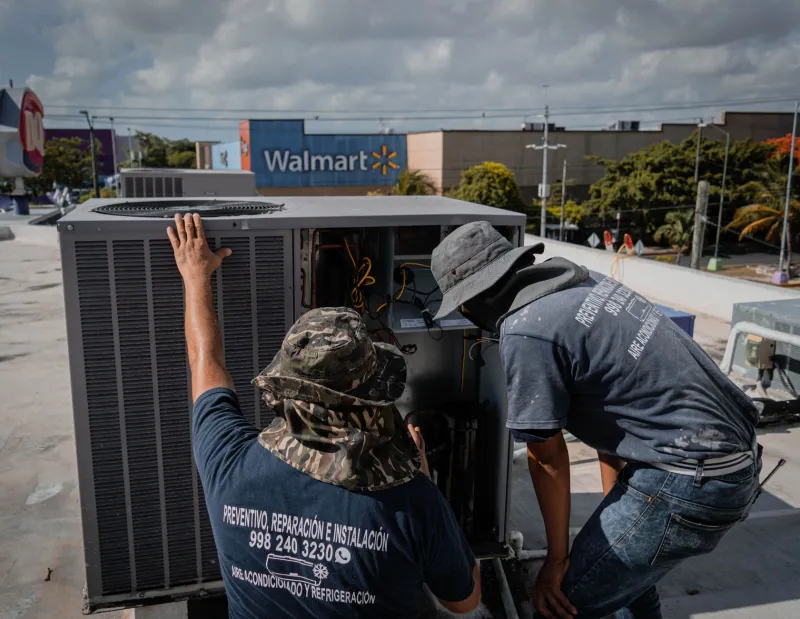
For many homeowners and business operators across the United States, the annual HVAC tune-up feels like an optional line item — something that can be pushed to next season when the budget is tighter or the calendar is fuller. It is an understandable impulse. If the system is cooling adequately and no warning lights are flashing, why spend money on a service call?
The answer, supported by years of industry data and the real-world experience of HVAC professionals, is straightforward: deferred maintenance does not eliminate costs. It defers them — and then multiplies them.
At Mast Air Conditioning, we have worked with residential and commercial clients throughout our service area who have arrived at the same uncomfortable realization: what they saved by skipping a single maintenance visit cost them several times more within the following two to three years. Understanding why this happens requires a closer look at what professional maintenance actually prevents.
The Compounding Nature of Small HVAC Problems
An air conditioning system is a collection of interdependent mechanical and electrical components. When one element begins to degrade, it rarely fails in isolation. Instead, it places additional strain on adjacent parts, accelerating their wear as well.
Consider a dirty air filter left unchanged for an extended period. Restricted airflow forces the blower motor to work harder, drawing more electricity and generating excess heat. That heat stresses the capacitor — a component responsible for starting the compressor. Capacitor failure, in turn, can cause the compressor itself to struggle or fail. Compressor replacement is one of the most expensive repairs in residential HVAC service, frequently ranging from $1,200 to $2,500 depending on system size and unit age. The original cause of that cascade? A filter that costs roughly $10 to $30 and takes minutes to replace.
This is not an isolated example. Refrigerant leaks, loose electrical connections, corroded coils, and improperly lubricated motors all follow similar trajectories: small and inexpensive to address when caught early, severe and costly when allowed to progress.
What the Numbers Actually Say
The U.S. Department of Energy has noted that a well-maintained air conditioning system can operate at or near its rated efficiency throughout its expected lifespan, while a neglected system can lose up to 5 percent of its efficiency for every year of missed maintenance. Over a decade, that translates into meaningfully higher monthly utility bills — costs that accumulate invisibly but persistently.
Industry research from HVAC trade organizations consistently indicates that preventive maintenance reduces the likelihood of unexpected breakdowns by 70 to 95 percent, depending on the system type and maintenance frequency. Emergency repair calls, which often occur on the hottest days of summer when HVAC technicians are in peak demand, carry premium pricing. A repair that might cost $200 during a scheduled service visit can approach $400 or more as an emergency call on a weekend afternoon in July.
Furthermore, most HVAC manufacturers in the United States require documented proof of annual professional maintenance to honor their equipment warranties. A homeowner who skips maintenance and experiences a compressor failure may find that the manufacturer declines the warranty claim — leaving them to absorb the full cost of a repair that could have been covered.
The Lifespan Equation
A central air conditioning system that receives consistent annual maintenance typically operates effectively for 15 to 20 years. A system that is serviced irregularly or not at all may begin to show significant performance decline within 8 to 12 years and may require full replacement well before the end of its designed service life.
The financial implication is substantial. A mid-range residential air conditioning system with professional installation currently costs between $5,000 and $12,000 in most U.S. markets. Even at the lower end of that range, premature replacement represents a significant unplanned expense. Contrast that with the cost of annual professional maintenance — typically between $75 and $200 per visit depending on system size, service level, and geographic market — and the return on investment becomes evident.
Over a 15-year period, consistent annual maintenance might represent a total investment of $1,500 to $3,000. That same period of deferred maintenance could result in multiple emergency repairs plus early system replacement, potentially totaling $8,000 to $15,000 or more.
What a Professional Maintenance Visit Actually Includes
One reason homeowners sometimes undervalue professional HVAC maintenance is that they are uncertain what the service entails. A thorough tune-up performed by a qualified technician covers far more than a visual inspection.
At Mast Air Conditioning, a comprehensive maintenance visit typically includes cleaning the evaporator and condenser coils, checking and topping off refrigerant levels as needed, inspecting and tightening all electrical connections, testing capacitors and contactors, lubricating moving components, measuring airflow across the system, clearing the condensate drain line, and evaluating overall system performance against the manufacturer's specifications.
Each of these tasks serves a specific protective function. Clean coils transfer heat efficiently, reducing energy consumption. Tight electrical connections prevent arc faults that can damage control boards. A clear condensate drain prevents water damage to ceilings, walls, and flooring — a consequence that extends well beyond the HVAC system itself.
Commercial Clients Face Amplified Consequences
For business owners, the stakes associated with deferred HVAC maintenance are even higher. A commercial HVAC system failure does not merely cause discomfort — it can interrupt operations, drive customers away, and in certain industries such as food service, healthcare, or data management, create compliance and liability concerns.
The cost of a single day of lost productivity or customer-facing downtime in a commercial environment frequently exceeds the annual cost of a comprehensive maintenance contract many times over. Businesses that invest in preventive service agreements often find that the operational continuity and budget predictability they gain far outweigh the monthly or annual service fees.
The Right Time to Start Is Now
One of the most common responses we hear from clients who have experienced a costly HVAC failure is some variation of: "I kept meaning to schedule the maintenance, but I just never got around to it." That sentiment is entirely human. Life is busy, and systems that appear to be functioning rarely feel urgent.
But air conditioning systems do not announce their decline in advance. They quietly accumulate wear until a threshold is crossed, and then they fail — often at the most inconvenient possible moment.
Whether your system is brand new or approaching the midpoint of its expected lifespan, establishing a consistent maintenance schedule is the single most effective action you can take to protect your investment, control your energy costs, and avoid the stress and expense of emergency repairs.
At Mast Air Conditioning, we are committed to helping our residential and commercial clients understand not just how their systems work, but how to protect them for the long term. Comfort you can count on, year-round, begins with the decision to treat your HVAC system as the essential asset it truly is.
Contact us today to schedule a professional maintenance visit or to learn more about our service agreements designed to keep your system performing at its best — season after season.