The Refrigerant Your AC Runs On Is Disappearing—Here's What That Means for You
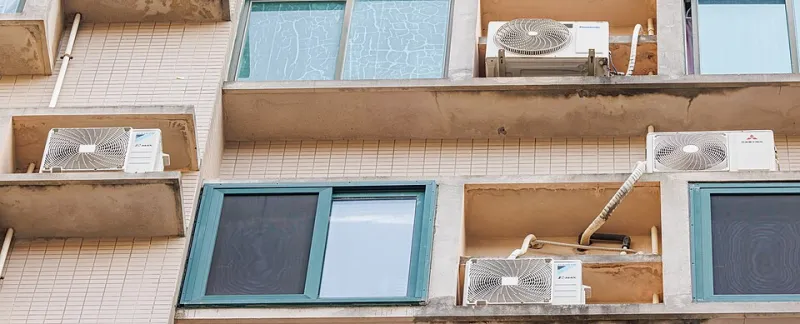
Photo: Dinkun Chen, CC BY-SA 4.0, via Wikimedia Commons
If your air conditioner needed a refrigerant recharge this summer and the quote made you blink, you were not imagining things. The chemicals at the heart of every cooling system are in the middle of a decades-long phase-out, and the effects are showing up on repair invoices from coast to coast. Here is what is actually happening—without the industry jargon.
Why Refrigerants Get Phased Out at All
Refrigerant is the working fluid that moves heat out of your home. For decades, the most common formulas relied on chemistry that turned out to be environmentally costly. Earlier generations of refrigerant damaged the ozone layer; their replacements solved that problem but turned out to be potent greenhouse gases—thousands of times more heat-trapping than carbon dioxide.
Under international agreements and US Environmental Protection Agency rules, the industry has moved through successive transitions: away from R-22 (the ozone-depleting standard for decades), then away from R-410A (the greenhouse-heavy successor), and toward lower-impact formulas such as R-32 and R-454B that dominate new equipment today.
The R-22 Problem: Already Here
R-22 was fully phased out of US production and importation in 2020. If your air conditioner was installed before 2010, there is a reasonable chance it runs on it. Remaining supplies exist only through reclaimed and recycled stock, which means:
- Prices are volatile and high. Scarcity has pushed R-22 costs to several hundred dollars per pound at retail, and a significant leak repair can require multiple pounds.
- Availability will only shrink. Every year, the reclaimed supply dwindles further.
- Repairs become uneconomical. A homeowner facing a $1,500 refrigerant recharge on a 20-year-old system is often one repair away from a replacement decision anyway.
The R-410A Transition: Happening Now
Homeowners with systems installed in the last 15 years largely avoided the R-22 problem—but only temporarily. As of January 2025, new residential air conditioners and heat pumps sold in the US must use next-generation refrigerants. R-410A remains available for servicing existing equipment for now, but its long-term trajectory mirrors what happened to R-22: rising costs, eventual scarcity, and mounting pressure to upgrade.
There is also a practical wrinkle. New refrigerants operate at different pressures and require different components, so R-410A cannot simply be swapped into a system designed for something else, and vice versa.
Repair or Replace: A Practical Framework
The refrigerant transition changes the math on an old repair-versus-replacement decision. Consider replacement more seriously when:
- Your system uses R-22. Every future leak repair becomes more expensive and less certain of being possible at all.
- Your system is beyond roughly 12 to 15 years old. Equipment approaching the end of its life will not benefit from an expensive refrigerant investment.
- A major component has failed. A dead compressor on an older, phased-out refrigerant system rarely justifies repair.
- Your energy bills are climbing. Modern systems, paired with current refrigerants, often cut cooling costs substantially compared to equipment a decade or more old.
If your system is newer and runs on R-410A, there is no need to panic. Servicing remains viable for years to come, and routine maintenance—especially leak detection—protects you from ever needing a large recharge.
What Homeowners Should Do Right Now
First, identify your refrigerant. It is printed on the data plate of your outdoor unit. Second, prioritize leak prevention: a well-maintained sealed system should never consume refrigerant, so regular tune-ups are your best financial protection. Third, if replacement is on your horizon, buying sooner rather than later lets you choose timing on your terms instead of being forced into an emergency decision during a July heat wave.
Refrigerant transitions are not a reason for alarm, but they are a reason for attention. At Mast Air Conditioning, we help homeowners understand exactly what their systems run on, what it will cost to maintain, and when an upgrade genuinely makes financial sense. Comfort you can count on should never come with a surprise invoice attached.