Before You Unpack a Single Box: The HVAC Inspection Every New Homeowner Should Run
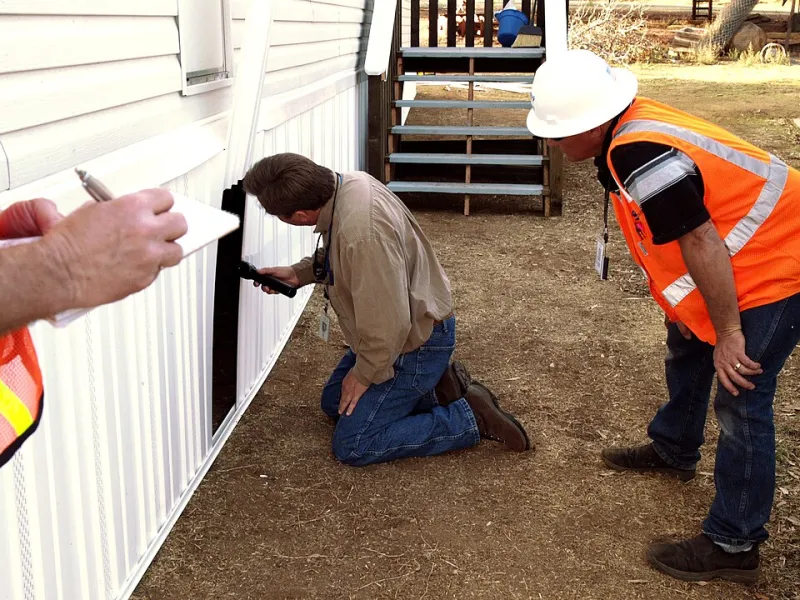
Photo: Amanda Bicknell, Public domain, via Wikimedia Commons
A home purchase is one of the largest financial commitments most Americans will ever make, yet the system responsible for comfort in every season is often the least examined during the buying process. Buyers open cabinets, test light switches, and scrutinize flooring—while the furnace, air conditioner, and ductwork go entirely unchecked. At Mast Air Conditioning, we regularly meet homeowners who inherited serious HVAC issues simply because no one looked. The good news: a thorough walkthrough takes under an hour and requires no special tools.
Start Outside: Locating and Evaluating the Condenser
Begin at the exterior unit, typically positioned along a side or rear wall of the home. Take a few minutes to assess its condition before you step inside.
- Check the manufacturer's label. The data plate on the condenser lists the manufacture date. In the HVAC industry, a system older than 15 years is approaching the end of its practical service life, regardless of how it sounds today.
- Look at the surroundings. Overgrown shrubs, stored items, or fencing pressed against the unit restrict airflow and shorten equipment life. Ideally, the condenser should have at least two feet of clearance on all sides.
- Inspect the fins and coil. Bent fins, accumulated debris, or visible corrosion suggest a system that has been neglected. A unit sitting on a sinking or tilted pad can strain refrigerant lines over time.
Find the Air Handler and Read Its History
Inside the home—often in a closet, attic, basement, or garage—the air handler and furnace hold more clues. Remove the filter and note its size, written on the cardboard frame. A filter that is gray and matted indicates it has not been replaced in months, if ever. More telling: write down the size. If the filter is a nonstandard dimension, someone may have improvised a solution rather than ordering the correct one.
Look for service stickers on the unit itself. Reputable HVAC companies tag equipment after maintenance or installation, often with dates. A blank cabinet with no service history is not automatically a red flag, but multiple stickers from different companies within a short window can hint at recurring problems.
Test Airflow Room by Room
This is the step most buyers skip, and it reveals the most. Close the front door behind you and walk through every room with the system running.
- Hold a tissue or strip of paper near each supply register. Weak or absent airflow in specific rooms often points to duct leaks, crushed flex duct, or balance issues buried in walls.
- Note temperature differences between rooms. A bedroom that is consistently five degrees warmer than the living room in summer signals a distribution problem, not a quirk of the house.
- Listen for whistling registers, rattling ducts, or a blower that cycles on and off rapidly. Short cycling frequently indicates an oversized or failing system.
Check the Thermostat and Drain Lines
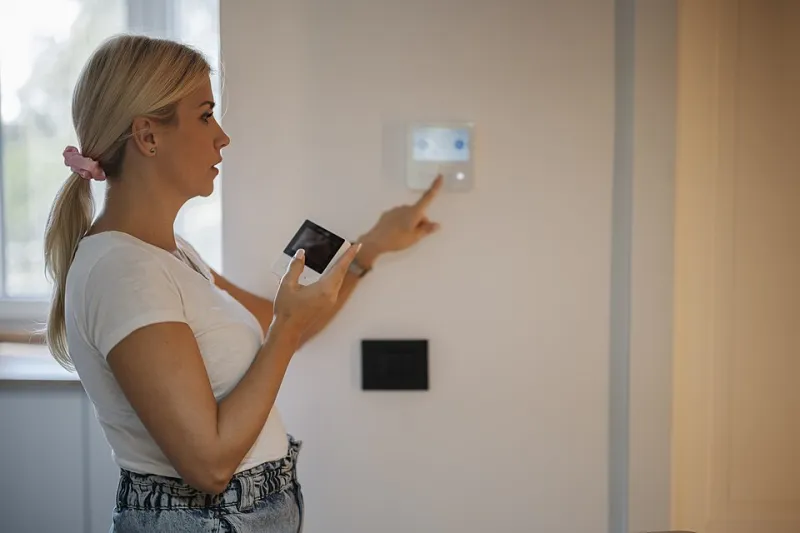
Set the thermostat several degrees away from room temperature and confirm the system responds promptly. If the home has an older mercury or basic digital thermostat, budget for a programmable or smart replacement—modern controls can reduce heating and cooling costs noticeably.
Near the indoor unit, locate the condensate drain line. Water stains, rust streaks, or an overflow pan with standing water suggest past or present drainage failures, which can damage ceilings and floors in homes with attic-mounted air handlers.
Review the Paper Trail
Ask the seller for maintenance records, the age of the system, and any warranty documentation still in force. In many US states, sellers disclose known defects—but HVAC problems that develop gradually often go unreported simply because the seller adapted to them. A home inspection typically covers the system only at a surface level, so your own observations matter.
Know When to Bring in a Professional
A walkthrough identifies warning signs; it does not replace a professional evaluation. If the equipment is more than a decade old, if airflow is uneven, or if the service history is a mystery, schedule a comprehensive inspection before closing. A modest investment in an expert assessment can uncover refrigerant issues, failing components, or ductwork deficiencies worth thousands of dollars in future repairs.
At Mast Air Conditioning, we help new homeowners start with clarity—documenting system condition, estimating remaining equipment life, and establishing a maintenance baseline from day one. Comfort you can count on begins with knowing exactly what you moved into.