Why Commercial HVAC Systems Break Down at the Worst Possible Moment — And How to Prevent It
The Timing Is Never Accidental
Ask any HVAC technician when commercial systems tend to fail, and the answer is almost always the same: during a heat wave in July, the week before a major retail holiday, or on the first genuinely cold day of November. It feels like bad luck. In reality, it is the entirely predictable result of systems that were already under stress before the season's demands arrived.
For small business owners — restaurant operators, retail shop managers, office building owners, medical office administrators — an HVAC failure at the wrong moment carries costs that go well beyond the repair invoice. Customers leave. Staff productivity drops. Perishable inventory may be at risk. And emergency service calls, by definition, cost more than scheduled maintenance.
The good news is that commercial HVAC failures during peak periods are rarely sudden. They are almost always the culmination of warning signs that went unaddressed. Understanding why these breakdowns happen is the first step toward making sure they don't happen to your business.
Reason One: Deferred Maintenance Compounds Over Time
Commercial HVAC systems are substantial investments, and the instinct to avoid maintenance expenses when a system appears to be running is understandable. The problem is that commercial equipment operates under significantly heavier loads than residential systems — longer daily run times, larger spaces to condition, more frequent door openings, higher occupancy levels, and sometimes the added heat load of commercial kitchen equipment or server rooms.
Under those conditions, components wear faster. Filters clog more quickly. Belts, bearings, and capacitors reach the end of their service life sooner than they would in a lightly used residential setting. When routine inspections and part replacements are skipped, each passing season increases the probability that something will fail — and the timing of that failure will almost certainly coincide with the moment the system is working hardest.
A twice-annual maintenance schedule — once in spring before cooling season, once in fall before heating season — is the baseline standard for most commercial applications. Businesses with particularly heavy usage or specialized environments may benefit from quarterly attention.
Reason Two: Filters Are Changed Too Infrequently
This is, by a wide margin, the most common and most preventable contributor to commercial HVAC problems. Commercial spaces generate more airborne particulates than residential ones: foot traffic brings in dust and debris, cooking produces grease-laden air, retail environments accumulate lint and fiber from merchandise, and high-occupancy offices cycle more air per hour than a home ever would.
When filters are not changed on a schedule appropriate to the environment — which for many commercial applications means monthly rather than quarterly — airflow restriction increases. The system's blower motor works harder to pull air through a clogged filter medium. Coils accumulate debris that reduces heat transfer efficiency. Over time, these compounding inefficiencies accelerate wear on every major component in the system.
A simple, documented filter replacement schedule, maintained consistently by building staff or through a service agreement, eliminates this risk at minimal cost.
Reason Three: Refrigerant Issues Go Undetected
Refrigerant leaks are gradual. A system doesn't lose its entire charge overnight — it loses small amounts over weeks or months, and the performance degradation is subtle enough that many business owners simply notice that the space feels a bit warmer than usual and adjust the thermostat rather than investigating the cause.
By the time a refrigerant leak has progressed to the point where it triggers an obvious failure, the compressor — the most expensive component in the system — has typically been operating under stress for some time. Running a compressor with insufficient refrigerant causes it to overheat and work against elevated pressure differentials, shortening its service life dramatically.
During professional maintenance visits, refrigerant levels should be checked and any leaks identified and repaired. This is not a task that building staff can perform; it requires licensed technicians with proper equipment and EPA certification.
Reason Four: Condenser Units Are Neglected
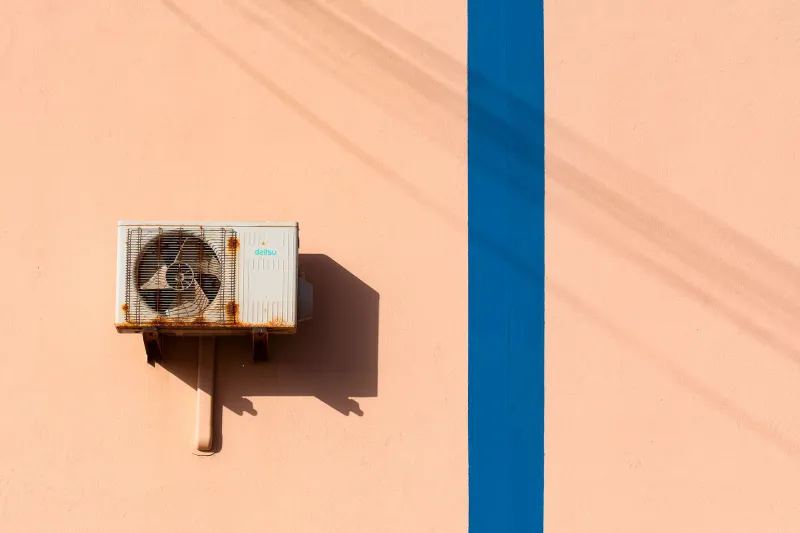
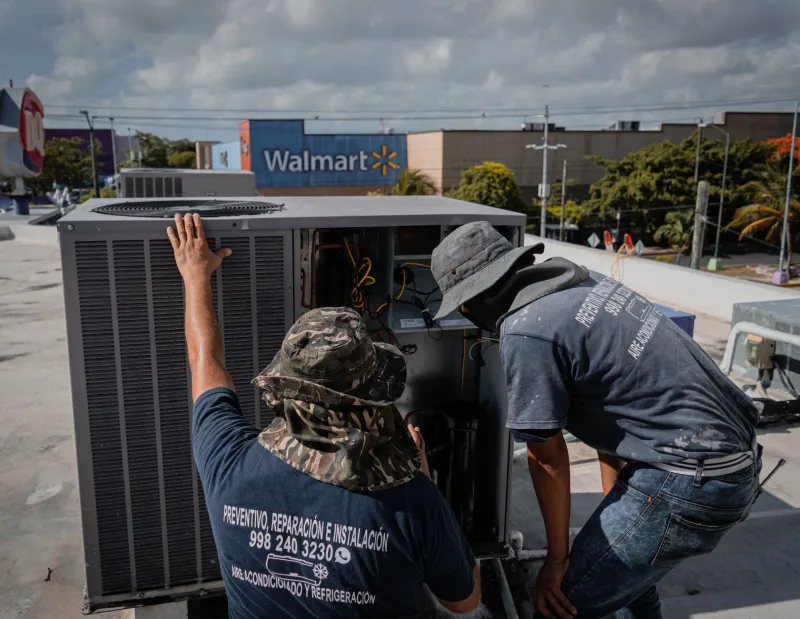
Outdoor condenser units on commercial buildings are often installed in locations that receive minimal attention: rooftops, side yards, or mechanical enclosures that are out of sight and therefore out of mind. Without regular cleaning, condenser coils accumulate dirt, leaves, cottonwood seed, and other debris that insulates the coil and prevents it from releasing heat efficiently.
A dirty condenser forces the entire refrigeration circuit to operate at higher pressures and temperatures. Energy consumption increases. Component wear accelerates. And on the hottest days of summer — when the ambient temperature is already working against the system — a fouled condenser can push equipment past its operational limits entirely.
Condenser coil cleaning should be part of every pre-season maintenance visit. For businesses located in areas with heavy cottonwood or pollen seasons, mid-season cleaning may also be warranted.
Reason Five: The System Was Never Properly Sized for the Space
Commercial spaces change. A retail location that was once a single open showroom may have been divided into offices. A restaurant may have expanded its kitchen equipment. A medical office may have added exam rooms with specialized ventilation requirements. When the use of a space changes significantly, the original HVAC system design may no longer be appropriate for the actual load it's being asked to handle.
An undersized system runs continuously without achieving the desired temperature, burning out components through overuse. An oversized system short-cycles — turning on and off too frequently — which is equally damaging to compressors and other components and also fails to properly dehumidify the space.
If your business has undergone significant changes in layout, occupancy, or equipment, a load calculation review by a qualified commercial HVAC contractor is a worthwhile investment.
Reason Six: No Service Agreement Is in Place
Many small business owners manage HVAC maintenance reactively — calling for service when something breaks rather than scheduling inspections proactively. This approach is understandable given the demands on a business owner's time and budget, but it is consistently more expensive in the long run.
A commercial HVAC service agreement provides scheduled maintenance visits, priority response when problems arise, and in many cases, discounts on parts and labor for repairs. More importantly, it ensures that someone with professional expertise is examining the system on a regular basis — catching developing problems before they become emergency failures.
For businesses where HVAC downtime has a direct and immediate impact on revenue or customer experience, a service agreement is not an optional expense. It is a form of operational insurance.
The Bottom Line for Business Owners
Commercial HVAC systems don't fail because of bad luck. They fail because the conditions that lead to failure — deferred maintenance, clogged filters, refrigerant loss, dirty coils, improper sizing — were allowed to develop unchecked. The peak season timing of those failures is simply a reflection of the fact that stressed systems fail when they're pushed hardest.
The investment in proactive maintenance is a fraction of the cost of emergency repairs, lost business, and the accelerated replacement of equipment that was not properly cared for. For business owners who depend on a comfortable environment to serve customers and support staff, that investment is straightforward to justify.
Mast Air Conditioning works with commercial clients across a range of industries to develop maintenance programs appropriate for their specific equipment and operational requirements. A conversation about your building's needs costs nothing — and the peace of mind it provides during peak season is worth considerably more.